
Have you found a home you would like to buy and are now at the stage of making an offer on a house?
You’re likely wondering whether you should make a high offer to ensure you are the chosen buyer to proceed, or whether there might be opportunity to make a low offer and secure a discount?
In this blog we highlight the best way to make an offer on a house and negotiate the best terms for all parties so that the transaction can proceed to a successful conclusion.
What to do before making an offer on a property
You’ll have likely already visited the property a few times before concluding that you would like to make an offer on a property, but what are the next steps? What do you need to do before putting an offer on a house?
Know your financial position
It’s important to know your financial position very well at the point of offering. It is often the case that an estate agent will ask about the finer details of your financial position prior to putting the offer forward.
Buying with a mortgage
If you’re buying a property with a mortgage you’ll have already spoken with a mortgage advisor or lender directly regarding your budget.
An estate agent will likely ask you for your Loan to Value ratio, where the cash proportion is being held, whether the cash is dependent on a property sale, or selling of other assets and which lender you have chosen to get your mortgage with.
If you have a mortgage broker, their details will also be needed should the estate agent need to confirm any details.
Buying in cash
Similarly to the cash portion when buying with a mortgage, when you put an offer forward it is often the case that an estate agent will need to understand where the money is being held and how accessible it is.
Some buyers choose to ask their solicitor to write a letter which can usually be supplied to satisfy the necessary checks regarding cash availability when offering.
In other cases, a buyer might simply wish to supply proof in a bank account or similar.
Whilst many of these checks can seem quite invasive, estate agents have certain legal obligations they must adhere to, and also ensure they are acting in the best interests of the seller by confirming that a potential buyer offering has the means to purchase the property.
Research local house prices
It’s prudent to conduct research on local house prices, whether you look at Zoopla or Rightmove, you can type in a property’s address and find the nearest similar properties that have sold over the past 12-18 months.
Together with considering the market conditions, this information on recently sold comparable properties is the same type of information and process that a bank valuer would follow when confirming the value of a property for a bank; it’s a good way to check on a price before making an offer on a house.
Why do some buyers choose to engage a buying agent?
Those who are uncertain about the market or perhaps do not feel confident in their negotiation skills might choose to engage a buying agent who will assist with finding and securing a suitable property.

Common questions when making an offer on a house
There are several common questions that are asked surrounding making an offer on a house.
What do you say when making an offer on a house?
As for what you should include in an offer on a property:
- The name and address of the buyer(s)
- The financial position
- Whether or not another home must be sold to enable you to buy
- Your ideal timeframe
- Offer amount
Do I need a solicitor to make an offer on a house?
In the UK you do not need a solicitor to make an offer on a house, but it is a good idea to have a solicitor in place should your offer be accepted.
What two things should you do before you make an offer?
Two things above all. First, research recent sold prices for comparable homes nearby so your figure is realistic. Second, get your finances in order, ideally with an agreement in principle in place, so you can offer with confidence and show the seller you are ready to proceed.
What is a reasonable offer to make on a house?
A reasonable offer is guided by recent sold prices for similar homes nearby, how long the property has been on the market and how much interest there is. In a steady market buyers often open a little below asking and negotiate from there. Where stock is limited and demand is strong, as is often the case in Chiswick, Hammersmith and Shepherd’s Bush, you may need to offer at or close to asking to be taken seriously. The sold prices of comparable properties are a better guide than the asking price alone.
What are the rules for making an offer on a house?
There is no legal limit on what you can offer and in England an offer is not legally binding until contracts are exchanged. The estate agent is legally required to put every offer to the seller and to carry out identity and source of funds checks. The practical rules are straightforward. Put your offer in writing by email, state your position clearly and confirm it by phone with the selling agent.
What are common mistakes when making an offer?
The most common mistakes are offering without an agreement in principle, anchoring to the asking price instead of recent sold prices, going in so low that it sours the negotiation, failing to put the offer in writing and being vague about your position. A clear offer that sets out your price, your timescale and your buying position gives the seller confidence and tends to move faster.
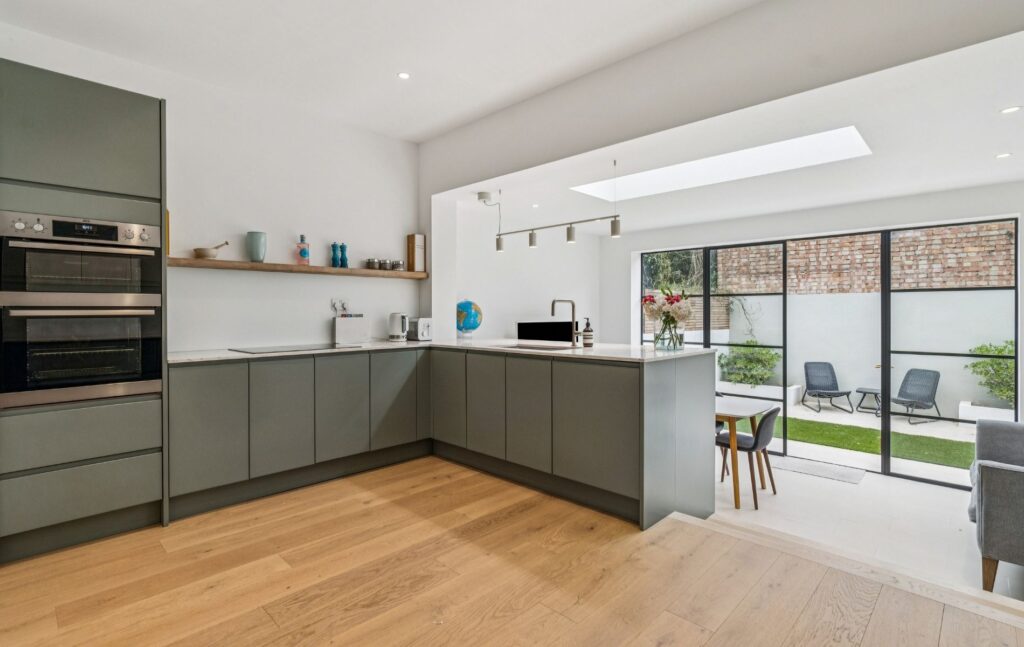
How to make an offer on a house
The best way to make an offer on a house is to communicate clearly, confirming your offer amount and any terms in writing via email and then confirm receipt by calling the selling agent.
Have your ID documents ready and on hand to supply, an estate agent is legally obliged to obtain proof of your identity and proof of your home address when you decide you would like to buy a property.
Buying a property in West London
If you’re considering buying a property in West London, do get in touch to register your interest.
Many homeowners choose to sell their homes off-market meaning there might be suitable homes available to buy that are not openly listed on property portals. Learn more about off-market properties in our guide.
What happens after your offer is accepted
Having your offer accepted is a real milestone but it is not yet legally binding.
In England there is a period between acceptance and exchange of contracts where either side can still change their mind, so keeping the process moving is the best way to protect your purchase.
You may come across two terms at this stage.
Gazumping is where a seller accepts a higher offer from another buyer after already accepting yours.
Gazundering is where a buyer reduces their offer close to exchange. Both are less likely when there is trust and momentum on both sides, which is one of the reasons we keep buyers, sellers and solicitors talking to each other throughout.
To keep things on track it helps to instruct a solicitor promptly, respond quickly to requests for information and stay in regular contact with your agent.
A good local agent will chase the chain, flag any delays early and keep everyone informed so the sale reaches exchange as smoothly as possible.
Making an offer on a house
Making an offer need not be daunting. Do your homework on local sold prices, get your finances in order and be clear and prompt in how you communicate, and you give yourself the best chance of securing the home you want on terms that work.
As an agent rooted in Chiswick, Hammersmith and Shepherd’s Bush, we know these streets and this market well and we are always happy to talk things through, whether you are ready to offer or simply weighing up your options.